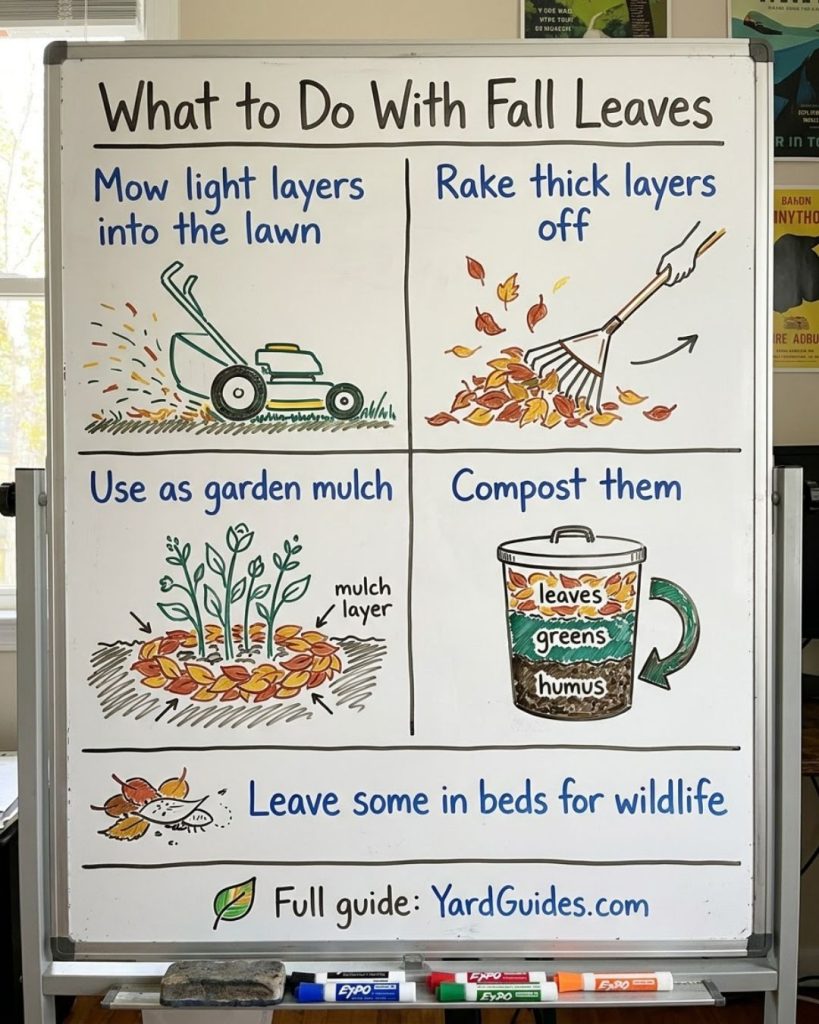
Quick answer: Most fall leaves are worth keeping, not bagging. Mow light layers into the lawn with your mower. University of Illinois Extension says shredded leaves break down and feed the soil, as long as you can still see grass through them. Rake off thick layers, because a heavy mat can smother grass, and put those leaves to work as mulch in garden beds or in the compost pile. Leave some leaves in beds for overwintering insects. Bag them only when you have no room to use them, or if they came from diseased trees.
Option 1: Mow them into the lawn (best for light cover)
Running over leaves with your mower chops them into small pieces that settle between grass blades and break down. University of Illinois Extension says to mow when leaves are dry, so they don’t clump and clog the mower. A small amount of fertilizer after mowing leaves in can help them decompose faster. (Illinois Extension)
How to tell if it’s too much: after mowing, you should still be able to see grass through the shredded leaves. If you can’t, rake some off first.
Tips:
– A mulching blade or mulching plug chops leaves finer, but a regular mower works with a few passes.
– Don’t mow wet, matted leaves. They clump and strain the mower.
– Keep the blade sharp; dull blades tear rather than shred. Here’s how to sharpen lawn mower blades.
Option 2: Rake thick layers off the lawn
Illinois Extension notes that the common worry about leaves smothering turfgrass “is certainly true if you have a thick layer of leaves on your lawn.” (Illinois Extension) Matted leaves block light and hold moisture against the grass all winter. Rake or blow heavy accumulations off the lawn, then use them below.
Shop leaf rakes · Shop leaf blowers
Option 3: Use them as mulch in garden beds
Illinois Extension says leaves make a good mulch in vegetable gardens, flower beds, and around trees and shrubs. Worked into soil, they help heavy clay drain and help sandy soil hold water and nutrients. (Illinois Extension) University of Maryland Extension recommends keeping vegetable beds covered with leaves or mulch over winter to reduce erosion, nutrient runoff and weed germination. (Maryland Extension)
Free printable: seasonal maintenance checklist for your mower & tractor
A 2-page spring-to-winter checklist for riding and push mowers and compact tractors. Then short, practical emails a couple of times a month. Unsubscribe anytime.
Tip: Shredded leaves mat down less than whole leaves and break down faster. A pass with the mower before you spread them helps.
Option 4: Compost them
Leaves are a classic “brown” compost ingredient, and Maryland Extension calls fallen leaves “an excellent addition to a compost bin.” (Maryland Extension) Mix them with “greens” like kitchen scraps or grass clippings, keep the pile damp, and turn it now and then. Extra leaves can sit in a bag or pile until you need more browns next summer.
Option 5: Leave some for wildlife
Illinois Extension notes that butterflies, native bees, salamanders and toads rely on leaf litter as winter habitat. (Illinois Extension) Maryland Extension says leaves and garden debris give winter shelter to butterflies, fireflies and moths that help with pollination and pest control. (Maryland Extension) Leave a layer in perennial beds, under shrubs and along fence lines, just not thick on the lawn.
When should you bag leaves?
- You can’t use them all. Large trees can drop more than one yard can absorb. Check whether your town collects leaves for municipal composting.
- Diseased leaves. Stick to leaves from healthy trees for mulch. If a tree had a serious leaf disease, ask your local extension office how to handle its leaves.
Quick decision guide
| Situation | Do this |
|---|---|
| Light scattering of leaves on the lawn | Mow them in when dry |
| Thick layer on the lawn | Rake or blow off; use elsewhere |
| Vegetable or flower beds | Spread shredded leaves as mulch |
| Too many leaves | Compost, or check for town leaf collection |
| Perennial beds and corners | Leave some for overwintering insects |
FAQ
Is it OK to leave leaves on the lawn over winter?
A light layer mowed in is fine and feeds the soil. A thick, matted layer can smother grass, so rake off heavy accumulations.
Should I mulch leaves with my mower?
Yes, for light-to-moderate cover. Mow when the leaves are dry, and make sure you can still see grass through the shredded leaves afterward.
Are leaves good for garden beds?
Yes. Extension services recommend them as mulch and as a compost ingredient. They protect soil over winter and improve it as they break down.
Is leaving leaves good for pollinators?
Yes. Leaf litter in beds gives butterflies, fireflies, moths and native bees a place to overwinter.
Putting the mower away after? Our lawn mower winterizing guide covers fuel, oil and storage.